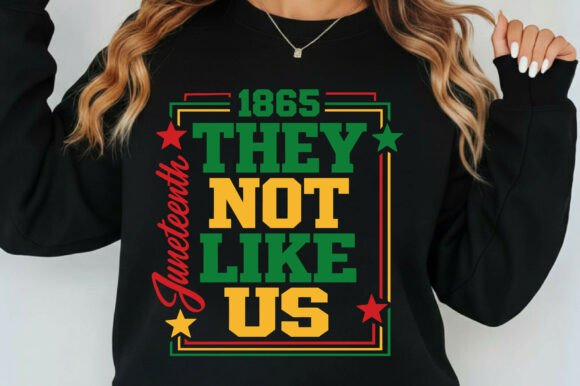
They Not Like Us Juneteenth Embroidery Review
As a designer who spends more time than I care to admit staring at stitch charts and testing thread tensions, I approach every new machine embroidery design with a mix of excitement and skepticism. The market is flooded with digital assets, but few actually translate well from a screen to the fabric under your needle. Recently, I had the chance to evaluate the "They Not Like Us Juneteenth Black History" graphic set for potential use in real-world projects. This isn’t just another clip art download; it’s a collection of Graphics specifically formatted for high-resolution output, including PNG, SVG, EPS, and AI files. But does it hold up when it comes to actual stitching? Let’s dive into how this design performs in practice.
First Impressions: Mood and Visual Impact
The moment you open the file, the visual personality of the design is clear. It carries a strong, assertive energy that aligns perfectly with the cultural significance of Juneteenth. For an embroidery project to resonate emotionally, it needs more than just legible text; it needs presence. This design delivers that through its bold layout and thematic weight. Whether you are creating a custom apparel piece or a statement accessory, the mood is immediate and unapologetic.
From a pure aesthetics standpoint, the composition feels balanced. The typography is sharp, which is crucial because embroidery can sometimes soften edges depending on the stitch type used. When I look at this as a potential tote bag design or a centerpiece for a sweatshirt embroidery project, I see a product that stands out in a crowded craft fair booth or an Etsy shop. It doesn’t feel like generic filler; it feels like a finished handmade product waiting to be realized. The inclusion of multiple file formats suggests versatility, allowing designers to scale the artwork without losing the crispness needed for detailed stitching.
Real-World Application: Where This Design Shines
I’ve been thinking about where this specific design would fit best in my current workflow. While many designs are limited to standard t-shirts, the structural integrity of these graphics makes them suitable for a wider range of merchandise. Imagine this embroidered on a heavy-duty canvas tote bag. The durability of the fabric complements the strength of the message, creating a functional item that also serves as a conversation starter.
Another strong candidate is the embroidered patch. Because the design likely features distinct shapes and clear boundaries, it could easily be digitized into a patch format. These patches add value to small shop products, allowing customers to personalize jackets, backpacks, or denim vests. For Etsy sellers looking to expand their catalog beyond simple shirts, offering customizable patches based on this theme could tap into a niche market interested in cultural expression and personal branding.
I also see potential in home decor items. A carefully stitched version on a linen kitchen towel or a sturdy cotton pillow cover could serve as a meaningful personalized gift. During holiday seasons, such items often sell better than mass-produced decor because they carry a story. The design’s clarity ensures that even on textured fabrics, the core message remains readable, which is essential for maintaining brand consistency and professional presentation.
Technical Considerations and Stitching Challenges
No review is complete without addressing the technical realities of digitization. Even with high-resolution source files, the final result depends heavily on how the design is converted into stitches. Here are some practical notes for fellow designers:
- Stitch Density: You must check the stitch density carefully. If the design includes large areas of solid color, ensure the digitizer has applied appropriate underlay and fill patterns to prevent puckering. Dense fills can make a garment stiff, so balance is key.
- Hoop Size Constraints: Before committing to production, confirm the required hoop size. If the design is expansive, it may require a larger frame, limiting where it can be placed on certain garments like baby clothes or small caps. Always test the dimensions against your physical hoop limits.
- Fabric Texture: The choice of material significantly impacts the outcome. On smooth cotton, the details will pop. However, on highly textured fabrics like boucle or thick fleece, fine details might get lost. In such cases, opting for a simpler applique design approach or using a stabilizer underneath can help maintain clarity.
- Thread Colors: Selecting the right thread colors is critical for contrast. Dark backgrounds require bright, reflective threads, while light fabrics allow for subtler palettes. Test your color choices on scrap fabric first to ensure the intended mood translates correctly.
Avoiding Common Pitfalls
There are places where this design should be used with caution. Small hoop sizes are risky if the design contains intricate lettering or tiny decorative accents. Satin stitch on very small text can become muddy and unreadable. Similarly, applying this to stretchy fabrics like thin jersey without proper stabilization can lead to distortion during washing. If you plan to use this on curved surfaces like caps or hats, ensure the digitization accounts for the curvature to prevent warping.
Additionally, consider the end-user experience. Products that undergo frequent washing need robust construction. Reinforcing the edges and using high-quality polyester threads will ensure the finished product lasts. Neglecting these details can erode customer trust, no matter how beautiful the original graphic was.
Final Verdict for Creative Entrepreneurs
The "They Not Like Us Juneteenth Black History" design asset offers a compelling foundation for serious embroidery work. Its strong visual identity and versatile file formats make it a valuable addition to any digital embroidery file library. For creative entrepreneurs and craft business owners, it provides a ready-made solution for culturally relevant merchandise that resonates with today’s conscious consumer.
However, success lies in the execution. Treat this not just as a graphic to print, but as a complex embroidery project requiring thoughtful planning. Test extensively, respect the limitations of your machine, and prioritize quality over speed. When done right, the result is more than just a commercial embroidery item; it becomes a piece of wearable art that honors heritage and style. I recommend downloading the files, experimenting with different stitch types, and seeing how this design transforms your next batch of design assets into tangible, profitable goods.