Flatwoods Monster Folk Art Print
As a designer who spends half my life digitizing files and the other half stitching them out, I’ve learned to be skeptical of anything that looks too perfect on a screen. There is a distinct gap between a high-resolution graphic and what actually survives the tension of an embroidery hoop. When I first encountered the Flatwoods Monster Folk Art Print, I didn’t just see a cryptid; I saw a potential bestseller for a very specific niche. If you are into weird American folklore, bold illustrative art, or just love the eerie aesthetic of the unexplained, this design catches the eye immediately. But does it hold up when converted into thread? That is the real question.
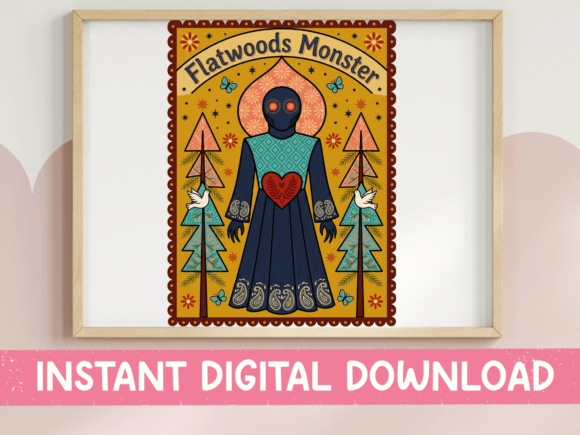
The visual personality of this piece is striking. It features a tall, dark figure draped in a long, flowing navy robe with teal paisley accents. On a monitor, those teal details pop against the deep navy, creating a moody, atmospheric vibe. For an embroidery project, however, contrast is king. The transition from dark navy to teal can be tricky if your stitch density isn’t dialed in perfectly. If the stitches are too dense, the fabric will pucker; if they are too sparse, the intricate paisley patterns might disappear into a muddy blur. This is not a design for beginners who are still learning their machine’s limits. It requires a steady hand and a good understanding of how different threads interact under tension.
Real-World Application: From Screen to Stitch
I recently evaluated this design with a specific end-use in mind: a custom embroidered tote bag for a local paranormal history tour group. Tote bags are a staple for Etsy sellers and craft fair vendors because they offer a large, flat canvas. However, they also present unique challenges. The canvas material can be thick, requiring a heavy-duty stabilizer to prevent the needle from breaking or the design from sinking into the fabric. When I mocked up the Flatwoods Monster Folk Art Print on a sturdy cotton canvas, the silhouette remained sharp. The "tall" aspect of the figure works well vertically, drawing the eye upward without overwhelming the bag’s structure.
Another scenario I considered was a sweatshirt for a boutique clothing line. Sweatshirts are forgiving fabrics, but they have a natural stretch. Embroidery on stretchy materials demands precision. If the stabilizer isn’t removed properly or if the hooping isn’t tight enough, the entire design can shift, ruining the symmetry of the monster’s robe. In this context, the paisley details become even more critical. They add texture and visual interest, turning a simple logo into a piece of wearable art. For custom apparel, this design elevates the perceived value of the garment. It doesn’t look like a cheap print; it looks like a deliberate, artistic choice.
Where to Exercise Caution
While the design has strong bones, there are places where it should be used carefully. First, avoid small hoop sizes. The detail level in the paisley sections requires enough space for individual stitches to breathe. If you try to cram this into a tiny patch or a miniature baby onesie, you risk losing the essence of the character entirely. The result would likely be a shapeless blob rather than a recognizable cryptid.
Textured fabrics are another minefield. While linen or raw silk might seem like a cool backdrop for folk art, the uneven surface can cause inconsistent stitching. The satin stitch edges around the figure might skip or break, leading to a frayed look after washing. Similarly, thin fabrics like lightweight polyester blends need extra support. Without proper backing, the aggressive pull of the fill stitches could distort the garment, making it look warped and unprofessional.
Dark fabrics deserve special mention. The navy robe of the Flatwoods Monster might blend into black fabric, causing the design to vanish. Conversely, placing it on white fabric makes the teal paisley sing, but it also highlights every minor imperfection in the stitching. Test your thread colors thoroughly before committing to a bulk run. A quick test on scrap fabric can save you hours of rework and ruined inventory.
Visual Appeal and Customer Trust
In the world of handmade products, presentation is everything. A well-executed embroidery job signals quality and care. When customers see the Flatwoods Monster Folk Art Print stitched cleanly on a finished product, they perceive higher value. It suggests that the seller put thought into the details. This is particularly important for personalized gifts. Whether it’s a holiday gift for a cryptozoology enthusiast or a wedding gift for a couple who loves quirky decor, the design tells a story. It sparks conversation. People want to ask, “Who is that?” and “What does it mean?” That engagement is powerful for brand building.
For commercial embroidery projects, consistency is key. Buyers trust brands that deliver uniform results. If one hat looks great and the next one looks sloppy, trust erodes quickly. The bold lines of this design help mitigate some of these risks, as the main shapes are easy to define. However, the smaller decorative elements require a skilled operator. Ensure your team understands how to handle the transition between the solid fill areas and the detailed paisley work. Consistent stitch density across the entire design is non-negotiable for a professional finish.
Practical Designer Notes
If you are planning to use this design, here is my checklist for success:
- Test on Scrap Fabric: Never go straight to the final product. Run the file through your machine on a piece of the same fabric you intend to use. Check for puckering, thread breaks, and color accuracy.
- Review Stitch Density: Look at the digitization. Are the fill stitches too close together? Do the satin stitches have adequate overlap? Adjusting these settings in your software can make a huge difference in the final look.
- Check Hoop Size: Ensure your hoop is large enough to accommodate the full design without cutting off any essential details. Remember that the corners of the hoop can sometimes interfere with complex shapes.
- Inspect Small Details: Zoom in on the paisley patterns. Can they be distinguished when stitched? If they are too fine, consider simplifying them or increasing the spacing between stitches.
- Black and White Mockups: Convert your design to grayscale to check contrast. This helps you see if the navy and teal will separate clearly once stitched.
- Licensing: Before selling any finished items, confirm the licensing terms. Does the license allow for commercial use? Are there restrictions on the number of units you can sell? Protect your business by getting this right from the start.
The Flatwoods Monster Folk Art Print is more than just a graphic; it’s a statement piece. It appeals to a passionate audience that values uniqueness and storytelling. By approaching the digitization and production process with respect for the technical challenges, you can create stunning handmade products that stand out in a crowded market. Whether you are adding it to your tote bag design collection, offering it as sweatshirt embroidery, or creating unique baby embroidery items for a nursery, this design has the potential to be a standout item. Just remember: the magic happens in the details, both in the design itself and in the execution. Take your time, test thoroughly, and let the craftsmanship speak for itself.