America Cherry Sublimation Clipart Design Review
As a designer who spends more time staring at stitch density charts and fabric swatches than scrolling through social media, I have developed a fairly strict filter for digital assets. The market is flooded with clipart that looks great on a screen but falls apart the moment it hits the needle plate. That is why I approach every new asset with a mix of skepticism and curiosity. Recently, I came across the America Cherry Sublimation Clipart Design, and I decided to put it through its paces—not just by looking at the pixels, but by imagining how it would translate into a physical, stitched reality.
This review isn’t about whether the image is pretty; it’s about whether it works as a functional piece of design for embroidery, sublimation, and commercial product creation. We are talking about real-world application: custom apparel, boutique merchandise, handmade gifts, and small business inventory. If you are an Etsy seller, a craft fair regular, or a designer building a brand, you need to know if this graphic holds up under scrutiny.
First Impressions: Mood and Visual Personality
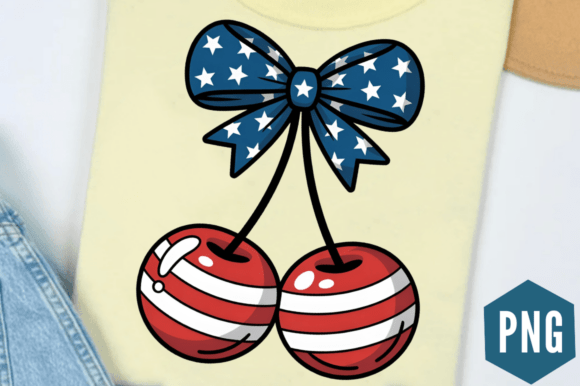
The first thing that strikes you about the America Cherry Sublimation Clipart Design is its immediate thematic clarity. It leans heavily into patriotic aesthetics without feeling overly cluttered or dated. Cherries have a long history in Americana imagery, often symbolizing sweetness, harvest, and national pride when paired with stars and stripes. This design captures that balance well.
Visually, the layout feels balanced. For an embroidery designer, the negative space is crucial. A design that is too dense can look muddy after stitching, while one that is too sparse might lack impact. This clipart seems to strike a middle ground, offering enough detail to be interesting but leaving room for the fabric and thread to breathe. The mood is cheerful, nostalgic, and versatile. It doesn’t scream "loud" so much as it whispers "classic."
Because the file includes a transparent background, the integration into various layouts is seamless. Whether you are placing it on a white cotton tote bag or a navy blue sweatshirt, the edges remain clean. This is a small technical detail that makes a massive difference in the final presentation of a handmade product.
Real-World Application: Where Does It Fit?
Let’s talk about actual projects. I imagined this design being used for a few specific scenarios to test its versatility.
The Custom Tote Bag: Imagine a canvas tote for a summer farmers market or a patriotic holiday sale. Placing the cherry motif centrally or clustered on the side creates an instant focal point. The high-resolution nature of the PNG files (300 DPI) ensures that even if you scale it up for a large print area, the lines remain crisp. For sublimation, this means vibrant colors that won’t bleed or pixelate. For embroidery, it suggests that the shapes are distinct enough to be outlined clearly.
Baby and Nursery Items: Cherries are inherently cute. This design could easily translate to a onesie, a burp cloth, or a nursery wall hanging. The softness of the fruit shape contrasts nicely with the boldness of the patriotic theme, making it suitable for gender-neutral baby gifts. When considering embroidery here, the smooth texture of muslin or cotton jersey allows the stitches to lay flat, creating a professional finish that parents appreciate.
Holiday and Seasonal Merchandise: Fourth of July, Memorial Day, Labor Day—these are peak seasons for cherry-themed decor. This design serves as a timely asset for small shop owners looking to refresh their inventory quickly. Because it is labeled as a sublimation clipart, it also works beautifully on kitchen towels, aprons, and pillow covers. These items are high-volume sellers during holidays, and having a design that bridges the gap between print and potential embroidery digitization is a strategic advantage.
Technical Considerations for Embroidery and Production
While the visual appeal is strong, we must address the technical realities of turning a graphic into a finished product. The product description notes that these are PNG files intended for sublimation, but many designers also use such graphics as references for digitizing machine embroidery designs.
If you are planning to convert this into an embroidery file, you need to consider the following:
- Stitch Density: The original graphic likely has solid fills. In embroidery, solid fills can become stiff and bulky. You will need to evaluate whether a fill stitch or a combination of satin and running stitches will best replicate the look without adding unnecessary weight to the garment.
- Small Details: Inspect the tiny leaves or stems in the design. If these elements are thinner than 1mm in the final stitched size, they may disappear or break during the stitching process. It is always wise to test the design in a smaller hoop size first to see if the details hold up.
- Thread Color Contrast: The transparent background helps, but you must choose thread colors that contrast well with your fabric. On dark fabrics, light-colored threads may require an underlay to pop, whereas on light fabrics, darker threads might need a stabilizer to prevent show-through.
For sublimation, the process is more forgiving. The 300 DPI resolution ensures that the ink transfers smoothly onto polyester-based fabrics. However, always check the color profile of your printer. Screen colors do not always match printed results, so a test print on scrap material is non-negotiable.
Where to Use It Carefully
No design is perfect for every surface. There are specific situations where the America Cherry Sublimation Clipart Design might present challenges:
- Textured Fabrics: Heavy knits, waffle weaves, or terry cloth can distort fine lines. On such fabrics, simpler, bolder designs tend to perform better. If you use this on a textured towel or robe, ensure the design is scaled up sufficiently so the details aren’t lost in the weave.
- Curved Surfaces: Applying this to caps or curved hat fronts requires careful placement. If the design has straight horizontal lines, they may appear warped on a curved brim. Test the placement on a dummy head before committing to the final product.
- Stretchy Fabrics: For activewear or stretchy blends, ensure you use the appropriate stabilizer. Without proper support, the design may pucker or shift during wear and washing.
- Dense Stitch Areas: If digitizing this for embroidery, avoid placing dense clusters of stitches near delicate seams or areas that will experience frequent friction, such as the hem of a sweatshirt.
Impact on Brand and Customer Perception
In the world of handmade goods, quality perception is everything. Using a high-resolution, professionally composed graphic like this elevates the perceived value of your product. Customers can often tell the difference between a pixelated, low-effort print and a crisp, intentional design.
The America Cherry Sublimation Clipart Design conveys professionalism. It suggests that you care about the details. For an Etsy seller or a boutique owner, this attention to detail builds trust. When a customer sees a sharp, clear image on a tote bag or apron, they assume the rest of the product—from stitching to packaging—is equally well-crafted. This consistency is key to building a loyal customer base.
Furthermore, the patriotic yet sweet theme broadens your audience. It appeals not only to those looking for traditional American motifs but also to customers who appreciate cute, stylized fruit illustrations. This dual appeal can help your products stand out in a crowded marketplace.
Final Verdict and Practical Advice
The America Cherry Sublimation Clipart Design is a solid, versatile asset for any creative entrepreneur. Its clean lines, transparent background, and high resolution make it suitable for both sublimation printing and as a reference for embroidery digitization. It fits naturally into a wide range of products, from casual apparel to home decor.
However, success lies in execution. Before launching a line of products featuring this design, take the time to:
- Test the design on your actual production materials.
- Check the licensing terms to ensure you are compliant for commercial use.
- Create mockups in black and white to verify contrast and readability.
- Consider how the design interacts with different thread colors or ink types.
By approaching this asset with a critical eye and practical testing, you can transform a simple digital graphic into a profitable, high-quality finished product. It is a tool that, when used wisely, can enhance your brand’s visual identity and delight your customers.